How to Subdivide Land in Nebraska: The Platting Process
Overview: Subdividing land in Nebraska is primarily regulated at the county and municipal levels, with local planning commissions enforcing specific zoning ordinances and minimum lot sizes based on state statutes.
Key Points:
- The 10 Acre Rule: Nebraska generally defines a subdivision as creating parcels of 10 acres or less. Larger parcels can often bypass the formal platting process entirely.
- City Jurisdiction (ETJ): Municipalities hold Extraterritorial Jurisdiction. City planning commissions can enforce subdivision rules on rural land located up to three miles outside city limits.
- Agricultural Exemptions: Land divided exclusively for farming or ranching purposes often qualifies for exemptions from strict residential subdivision regulations.
A Simpler Option: If the county bureaucracy, high surveying fees, and months of waiting are holding you back, many landowners choose to sell their Nebraska land directly for cash and skip the development process entirely.
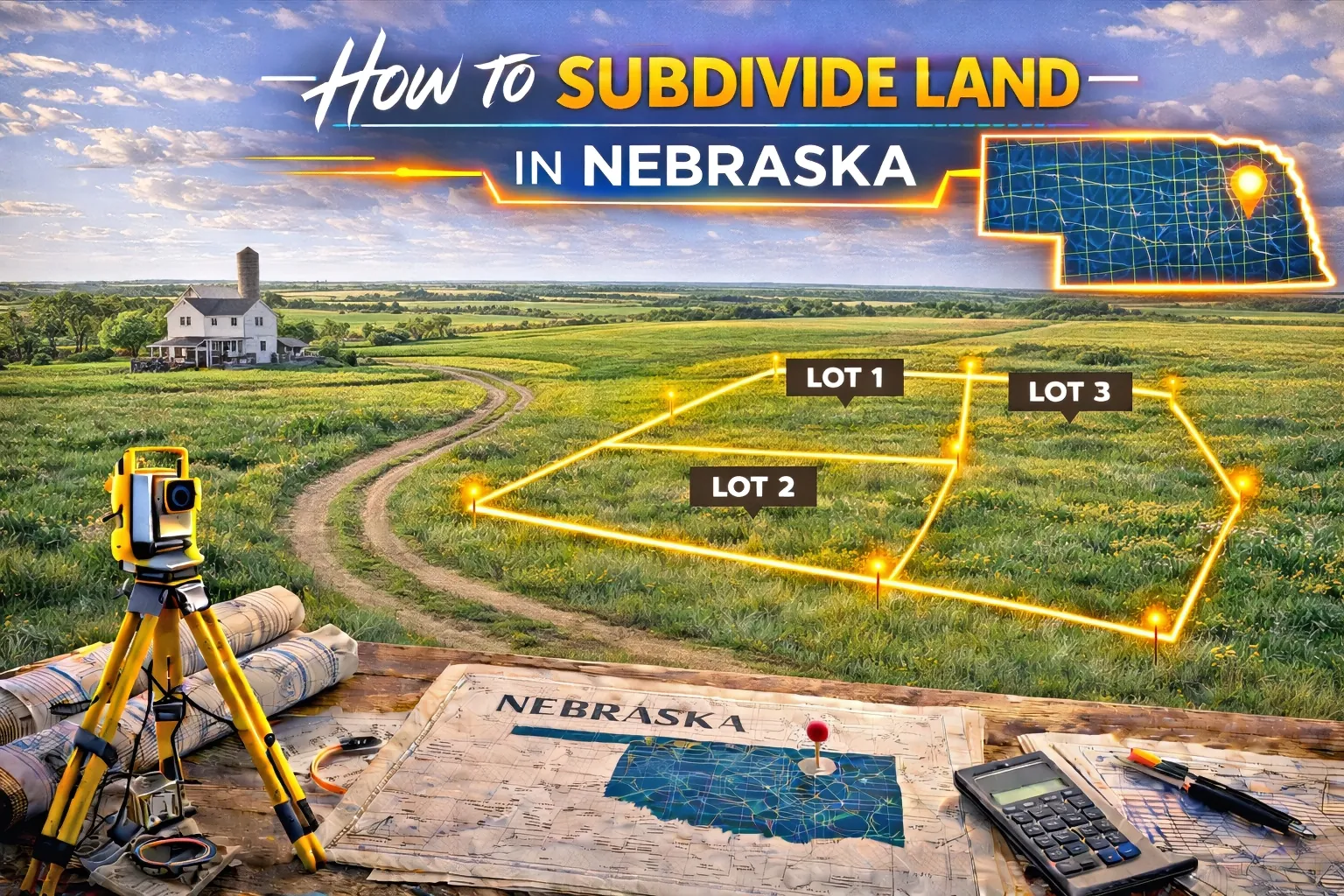
Subdividing land in Nebraska offers an excellent opportunity to maximize property value and create new development parcels. The state enforces specific regulations to ensure organized growth, adequate infrastructure, and proper zoning compliance. Landowners must understand local ordinances, state statutes, and the financial commitments required before beginning the platting process. This guide provides a comprehensive breakdown of the Nebraska land subdivision process. We cover state laws, the step-by-step approval process, and the expected costs to help you make an informed decision about your property.
Understanding Nebraska Land Subdivision Laws
Nebraska delegates most zoning and subdivision authority to individual counties and municipalities. State statutes provide the framework, while local planning commissions dictate the specific rules for your parcel.
The 10-Acre Rule and Agricultural Exemptions
Nebraska law generally defines a subdivision as the division of a lot, tract, or parcel of land into two or more lots where any one resulting parcel is 10 acres or less. Dividing your property into parcels that remain larger than 10 acres often exempts you from the rigorous formal platting process. Many counties provide agricultural exemptions. Dividing rural land strictly for farming or ranching purposes while utilizing existing public roads allows you to bypass standard subdivision regulations. You must verify these specific acreage exemptions with your local county zoning administrator, as rules vary significantly between urban jurisdictions like Douglas County and heavily rural areas.
The Extraterritorial Jurisdiction (ETJ) Factor
Proximity to city limits significantly impacts your subdivision project. Nebraska grants municipalities Extraterritorial Jurisdiction to control development outside their corporate boundaries. Primary class cities possess a three-mile ETJ, first-class cities typically enforce a two-mile ETJ, and smaller villages usually have a one-mile ETJ. If your rural land falls within this zone, you must comply with the city’s subdivision regulations and obtain approval from the city planning commission, even though you pay county taxes.
Zoning Classifications and Minimum Lot Sizes
Before drafting any plans, you must identify your property’s current zoning classification. Nebraska counties designate land into specific districts such as Agricultural, Residential, or Commercial. Each zoning district mandates a strict minimum lot size and minimum street frontage requirement. A rural agricultural zoning district might mandate a minimum lot size of 20 acres per dwelling unit to preserve farming operations. If your goal is to create two-acre residential lots, you must apply for a zoning amendment before beginning the subdivision process. Rezoning land requires a separate application, additional fees, and a separate public hearing process before the county board.
The Step-by-Step Nebraska Subdivision Process
Converting a single parcel into multiple legal lots requires moving through several municipal and county approvals. The standard timeline takes anywhere from three to nine months depending on the complexity of the project.
Step 1: The Pre-Application Meeting
Schedule a meeting with the local planning and zoning department before spending money on surveys or engineering. Bring a rough sketch of your proposed lot layout. The zoning administrator will identify potential zoning conflicts, explain minimum lot size requirements, and outline the specific application steps for your jurisdiction.
Step 2: Boundary Survey and Topographic Mapping
Hire a Nebraska-licensed land surveyor to establish the exact legal boundaries of your property. The surveyor will map existing structures, utility lines, and topographic features to ensure the new lots meet all setback requirements.
Step 3: Submitting the Preliminary Plat
The preliminary plat is a detailed map prepared by your surveyor or engineer. It shows the proposed lot lines, street layouts, utility easements, and drainage plans. You will submit this document to the planning commission along with the required application fees. The planning commission holds a public hearing to review the preliminary plat. Neighboring property owners receive notification and can voice concerns. The commission then votes to approve, require modifications, or deny your layout.
Step 4: Infrastructure and Subdivision Agreements
If your subdivision requires new roads, water lines, or sewer extensions, you must submit detailed engineering plans. Local governments require developers to sign a legally binding Subdivision Agreement. This contract guarantees that you will construct the necessary public improvements to city or county standards.
Step 5: Final Plat Approval and Recording
The final plat is the official legal document that creates the new lots. After completing the required infrastructure or posting a performance bond, the city council or county board of commissioners votes to approve the final plat. Once approved, you must record the final plat with the local Register of Deeds. The county assessor then assigns new parcel identification numbers to each lot, granting you the legal authority to sell them individually.
Key Professionals Required for Platting
Successfully navigating local government bureaucracy requires an experienced team of professionals.
- Licensed Land Surveyor: A surveyor drafts the legal descriptions, places the physical boundary markers, and creates the official plat maps.
- Civil Engineer: An engineer designs the grading plans, stormwater management systems, and utility layouts required for larger developments.
- Real Estate Attorney: An attorney drafts the Subdivision Agreement, reviews utility easements, and ensures your project complies with the Nebraska Revised Statutes.
Costs and Fees to Subdivide Land in Nebraska
Subdividing land requires a significant financial investment.
Costs vary wildly depending on the location, the number of lots, and the required infrastructure.
Below is an estimated breakdown of the costs to subdivide a standard parcel into a minor subdivision in Nebraska.
Detailed Breakdown of Expenses
Surveying and Engineering Fees
Surveying represents your largest upfront cost when subdividing land. Complex terrain, heavily wooded areas, and outdated legal descriptions will naturally increase a surveyor’s hourly rate and total time on site. Engineering costs also scale rapidly if the local Nebraska county requires extensive stormwater retention studies or new road designs to support the subdivision.
Soil Testing and Septic Requirements
Properties located outside city limits usually rely on private wells and onsite wastewater treatment systems. During the preliminary plat phase, you need a certified professional to conduct soil percolation tests. Land with high clay content or shallow bedrock requires expensive engineered mound systems to make the lots buildable, as standard conventional septic tanks are only viable in highly permeable soil.
Application and Platting Fees
Municipalities charge processing fees to cover the administrative burden of reviewing your project. A typical Nebraska county charges a base fee of $200 to $500 for a preliminary plat, plus an additional $10 to $50 for every new lot created. You can expect a very similar fee structure when submitting the final plat for official approval.
Infrastructure and Utility Costs
Standard estimates exclude the physical construction of roads, extending municipal water lines, or installing power poles. Lacking direct access to existing public utilities means infrastructure construction can easily add tens of thousands of dollars to your overall project budget.
Simpler Alternatives: Administrative Plats and Lot Splits
Landowners looking to divide a parcel into just two or three pieces can often use a simplified process known as an Administrative Plat or a Lot Split. This fast track option lets you bypass the public hearings and extensive engineering requirements associated with a full, major subdivision. To qualify for an administrative lot split in Nebraska, your project typically must meet specific criteria:
- The division creates a small number of lots, usually limited to between two and five parcels.
- Every new lot has direct frontage on an existing public street or county road.
- The project requires zero new public infrastructure or utility extensions.
- The division complies perfectly with all current zoning regulations and minimum lot sizes.
Administrative lot splits require a boundary survey and a simple application filed with the zoning administrator. The approval timeline often drops to a few weeks, and the application fees are significantly lower than standard platting. You can explore general county services and zoning authority structures through the Nebraska Association of County Officials.
The Challenges of Subdividing NE Rural Acreage
Subdividing rural acreage means upfront capital, monthly planning commission delays, and holding costs that keep stacking — property taxes, insurance, and maintenance throughout the entire approval window. Market conditions can also shift during a typical nine-month process, leaving newly created lots worth less than projected. Many landowners skip it entirely and sell as is to a specialized land buyer for a guaranteed cash payout.
Beyond the Cornhusker State: Regional Land Division Strategies
Subdividing acreage in neighboring states means navigating a different set of zoning laws, agricultural exemptions, and local platting procedures. Use these resources to guide parcel divisions across the region.
- Colorado Parcel Splitting Process: Navigate the Centennial State’s specific county regulations and land use policies to successfully separate your plains or mountain property.
- Dividing Land in Iowa: Understand the Hawkeye State’s agricultural zoning codes and local platting procedures to efficiently carve up your rural farmland.
- Kansas Lot Division Rules: Master the Sunflower State’s local planning requirements to smoothly divide your agricultural tracts and recreational acreage.
- South Dakota Land Separation Guide: Learn the Mount Rushmore State’s planning procedures to efficiently carve up your prairie parcels and maximize investment value.
A Faster Alternative: Sell Your Nebraska Land As Is
Skip the county zoning hurdles, surveying fees, and public hearings. Bubba Land Company buys rural acreage, hunting land, and inherited properties as is — we handle the paperwork, cover closing costs, and close on your timeline. Reach out directly to discuss a cash offer for your property and skip the platting process entirely.