How to Subdivide Land in Rhode Island: Maximize Your Acreage
Overview: Subdividing land in Rhode Island is primarily governed by the Rhode Island Land Development and Subdivision Review Enabling Act. This gives individual cities and towns the power to dictate their own zoning ordinances. Landowners often find that state environmental protections enforced by RIDEM add significant hurdles, making the process highly dependent on both local comprehensive plans and regional ecological rules.
Key Points:
- Local Control: There is no statewide standard for minimum lot sizes or setbacks. Every municipality enforces its own specific zoning codes.
- Minor vs. Major Subdivisions: Minor subdivisions (typically 5 or fewer lots with no new roads) are much faster to process than major subdivisions, which require extensive infrastructure planning and public hearings.
- Environmental Red Tape: Projects must comply with strict RIDEM regulations, particularly regarding Onsite Wastewater Treatment Systems (OWTS) and freshwater wetlands.
- High Upfront Costs: Landowners must pay out of pocket for land surveyors, civil engineers, soil tests, and legal representation before any approval is guaranteed.
Side Note: If the bureaucracy, engineering costs, and months of public hearings are becoming a time sink, some landowners choose to sell their Rhode Island land directly for cash and move on without the prolonged stress of development.
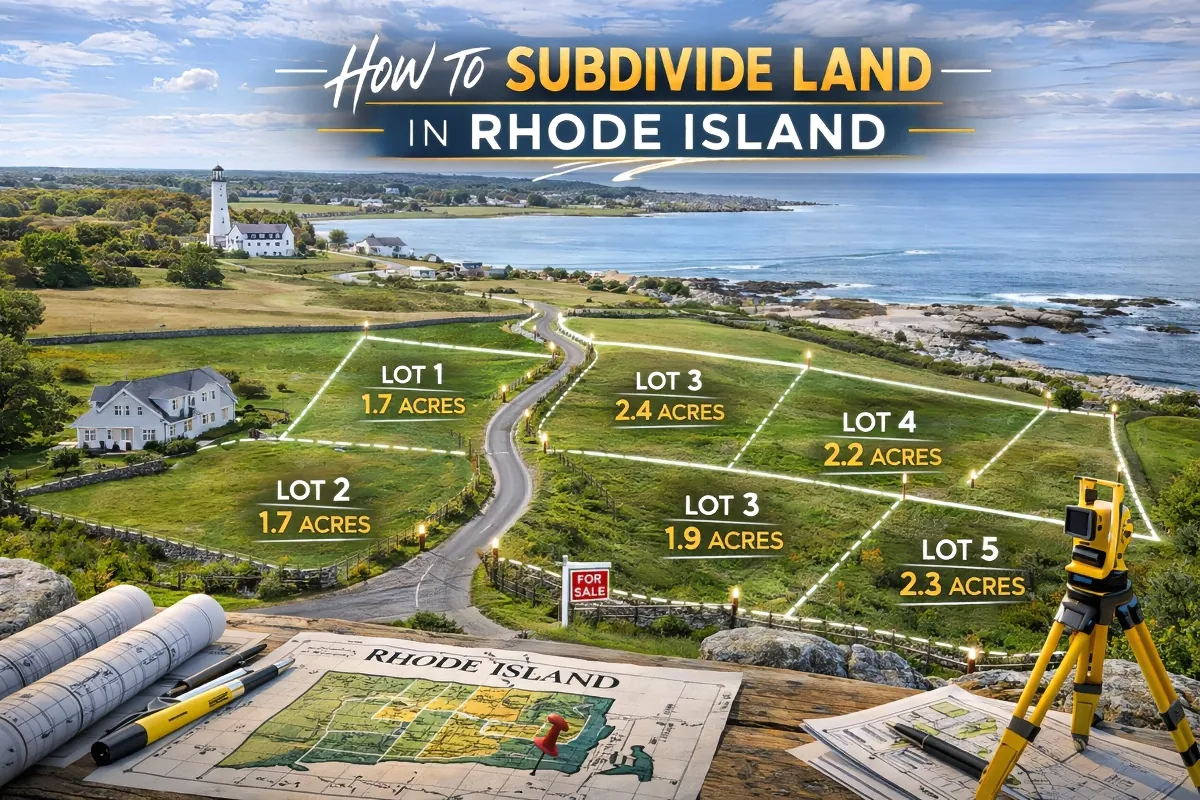
Understanding Rhode Island Subdivision Laws
Subdividing land in Rhode Island is governed at the state level by the Rhode Island Land Development and Subdivision Review Enabling Act of 1992. You can review the specifics of this legislation through the Rhode Island Statewide Planning Program. This state law creates a standardized framework that every local municipality must follow. The actual power to approve or deny your subdivision lies with your local city or town Planning Board and Zoning Board of Review.
Every municipality in Rhode Island has its own comprehensive plan and zoning ordinance. You must align your subdivision project with your specific town’s rules. For example, towns like Westerly provide a clear Land Development Process Overview to help property owners understand local expectations.
Recent updates to Rhode Island law include the Unified Development Review. This allows local planning boards to grant zoning relief at the same time as project reviews. This helps developers avoid separate hearings before multiple boards.
The Three Types of Subdivisions in Rhode Island
The classification of your project dictates the approval procedure.
- Administrative Subdivision: This involves adjusting existing lot boundaries or merging lots. It yields no additional lots for development and creates no new streets. A decision is typically rendered quickly by a local Administrative Officer.
- Minor Subdivision: This classification applies to residential subdivisions creating five or fewer lots without requiring major zoning waivers or new street extensions. The approval process usually requires two stages: a Preliminary Plan and a Final Plan.
- Major Subdivision: A major subdivision consists of six or more lots, or any subdivision requiring new roads and significant infrastructure. This is a heavy process requiring three distinct stages of review: Master Plan, Preliminary Plan, and Final Plan.
The Step by Step Subdivision Process
Step 1: Check Local Zoning and Comprehensive Plans
Check your property’s zoning district to ensure your desired lot sizes meet the minimum requirements. Each town in Rhode Island enforces its own dimensional regulations for acreage and street frontage.
Step 2: Request a Pre-Application Meeting
Meet with your local Town Planner to review your concept plans before spending money on engineering. This informal meeting helps you understand the specific local hurdles your project will face.
Step 3: Hire a Surveyor and Engineer
You need professionals to draft your plans. You must hire a registered land surveyor and a civil engineer to handle topography, stormwater management, and soil testing for septic systems.
Step 4: Submit Your Application for Review
Once submitted, your town’s planning department will issue a Certification of Completeness. Your application will then likely go before a Technical Review Committee to check engineering details before it reaches the Planning Board.
Step 5: Attend Public Hearings
Major subdivisions and minor subdivisions involving new streets require public hearings. Nearby property owners will receive certified letters notifying them of your plans. Abutters often voice opposition during these hearings.
Environmental Approvals and RIDEM
Rhode Island is heavily regulated regarding environmental protection. You must work with the Rhode Island Department of Environmental Management (RIDEM) before subdividing land. If your land lacks access to public sewers, you need RIDEM approval for an Onsite Wastewater Treatment System (OWTS) to ensure the soil can support a septic system.
You must also identify any wetlands on the property. The Freshwater Wetlands Act dictates strict buffers and setbacks. If your proposed subdivision impacts these protected areas, you will need special permits from RIDEM, which can add significant time and expense to your project.
Infrastructure and Road Requirements
Creating new lots often means building new infrastructure. If your subdivision requires a new road, Rhode Island towns have strict public works standards. You are responsible for the cost of paving, installing curbs, creating drainage systems, and sometimes extending utility lines.
Towns require you to post a performance bond before approving the Final Plan. This guarantees the town that you have the funds to complete the required roadwork and infrastructure even if you abandon the project.
Costs and Timelines You Should Expect
Subdividing land requires significant upfront capital. You will pay for surveying, civil engineering, RIDEM permits, application fees, and legal representation.
The timeline is dictated by municipal clocks. Once your application is certified complete, a Planning Board has a set number of days to act on a specific stage. A simple minor subdivision takes several months. A major subdivision takes over a year to reach the Final Plan stage.
The Hassle Free Alternative: Sell Your Rhode Island Land As Is
Navigating the Rhode Island Land Development and Subdivision Review Enabling Act takes time, money, and patience. You can skip the surveying fees, engineering costs, and lengthy municipal hearings entirely.
Bubba Land Company buys vacant rural land, hunting land, timberland, and inherited properties nationwide for cash. We provide a hassle free, as is cash sale for landowners who want to avoid the fees and long timelines of traditional real estate development.
Reach out to Bubba Land Company today to sell your Rhode Island land for a competitive cash offer.