New Mexico Fence Laws: The Ultimate Guide (2026)
Overview: New Mexico fence laws are governed by the state’s open range (“fence-out”) framework, livestock statutes, and locally adopted herd district rules under the New Mexico Statutes Annotated (NMSA). In most rural areas, landowners must fence livestock out, not require neighbors to fence animals in. This structure determines whether a fence is lawful, who pays for it, and what remedies are available in a dispute.
Key Points:
- Open Range: Landowners generally fence livestock out.
- Herd Districts: Some areas require livestock to be fenced in.
- Lawful Fence: Must be reasonably sufficient for its purpose.
- Property Lines: Fences do not set legal boundaries.
Side Note: If fence disputes or boundary issues are becoming more trouble than the land is worth, you can sell your New Mexico land directly to Bubba Land Company and avoid the ongoing conflict.
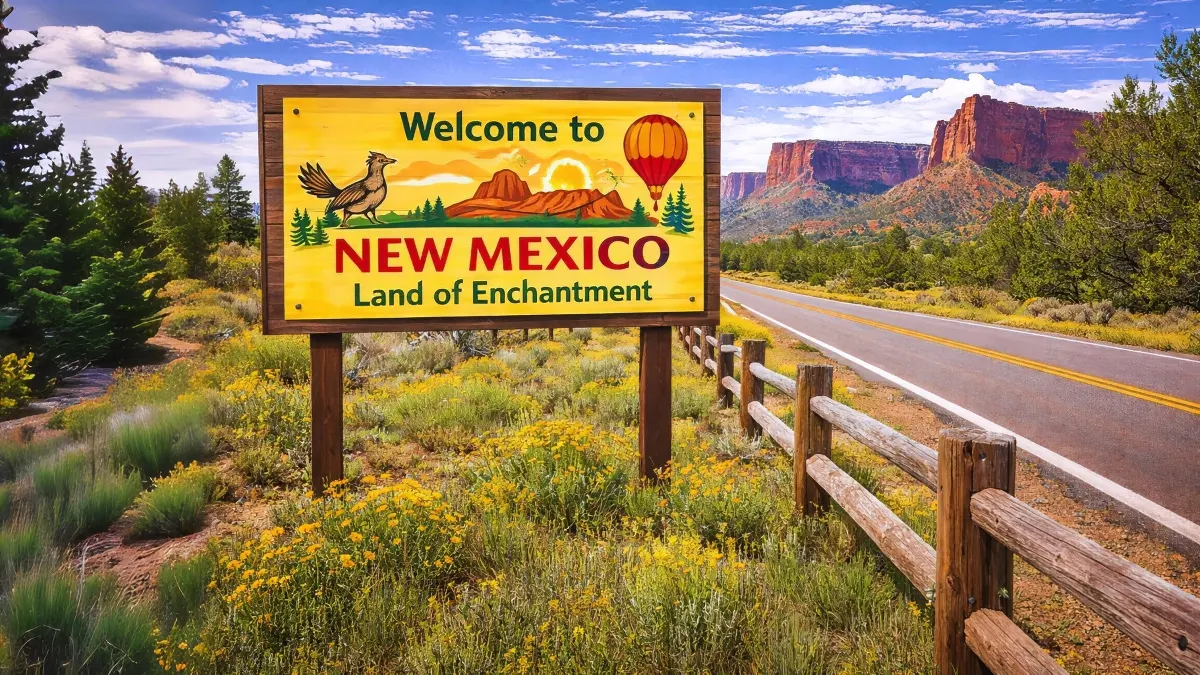
New Mexico’s Open Range (Fence-Out) Rule
Most fence disputes in New Mexico make more sense once you understand the state’s historical approach to livestock. In many rural areas, the legal baseline is that landowners who want protection from wandering livestock are expected to build and maintain fencing that keeps animals out. That’s why New Mexico is commonly described as a “fence-out” state under NMSA Chapter 77, Article 16.
- Practical meaning: If livestock wander onto unfenced or poorly fenced land, the livestock owner is not always automatically liable for damage in the way many people assume.
- What this does NOT mean: “Open range” is not a free-for-all. It does not give someone permission to intentionally turn animals loose onto a neighbor’s land or act negligently.
- Why it matters for neighbor fences: In a fence-out area, a neighbor often has no legal duty to build a boundary fence for your benefit unless another rule applies (like a herd district or a specific agreement).
- Common misunderstanding: People move from fence-in states and assume the livestock owner must always contain animals. In New Mexico, the default can be the opposite depending on location.
Herd Law Districts: When the Rule Flips to Fence-In
Herd law districts are the single biggest “exception” that changes outcomes in New Mexico fence disputes. Under NMSA Chapter 77, Article 12 (Herd Law Districts), local areas can be designated so that livestock must be restrained and not allowed to run at large. If your land is inside an established herd law district, the expectations around fences and livestock responsibility can look much more like a fence-in state.
- Inside a herd district: Livestock owners may be expected to keep animals contained, and allowing animals to run at large can create liability and even criminal consequences in certain situations (for example, livestock running at large on roads within herd districts is treated differently).
- Outside a herd district: The default open range approach is more likely to apply, especially in rural areas.
- Why this matters for “is my neighbor’s fence legal?” In many disputes, the legality question is really: “What rules apply here?” Herd district status can change the entire analysis.
- Do not guess: Don’t rely on what a neighbor says. Confirm herd district status with county records, local ordinances, or official mapping where available.
“Legal Fence” vs. “Lawful Fence” in New Mexico
When people say “Is this fence legal?”, they usually mean one of two things: (1) does it satisfy local zoning/ordinance rules (height, setbacks, materials), or (2) does it qualify as a lawful fence for livestock and liability purposes under state law. Those are different questions, and mixing them up causes real problems.
- Municipal legality: A fence can be “legal” under a city ordinance (height and placement) but still be irrelevant to livestock liability questions.
- State-law function: For livestock-related disputes, the fence is evaluated by whether it is reasonably sufficient for the type of animals and the purpose (restraining or excluding livestock).
- No one-size-fits-all measurement: New Mexico does not operate like states that define a single “lawful fence” with a fixed height and post spacing that applies everywhere.
- Condition matters: Even a well-built fence can stop being “effective” if it’s not maintained (downed wires, missing posts, broken gates).
New Mexico Statutory “Legal Fence” Requirements
The Fence-Out Statutes and Why “Willful Trespass” Comes Up
New Mexico’s fence-out approach shows up in how the law treats livestock damage claims. In older New Mexico case law applying these livestock-and-fence principles, courts focused heavily on whether land was within a herd law area and whether the claimant had a lawful fence in place—sometimes also discussing whether the livestock trespass was “willful” in a way that would change liability.
- Why you should care: If you’re dealing with livestock damage and you do not have a fence that qualifies as reasonably sufficient, you may have fewer remedies than you expect in open range areas.
- Local rule check: If the property is within a herd district, the analysis can shift toward livestock containment obligations.
- Evidence matters: Photos of fence condition, gate status, and livestock entry points matter more than opinions about who “should” have built the fence.
- Don’t skip the basics: Even strong legal arguments often fail when the location status (open range vs. herd district) and fence condition aren’t documented.
Who Pays for a Fence in New Mexico?
New Mexico does not have a blanket statewide rule that neighbors always split boundary fence costs 50/50. In many disputes, one owner builds a fence and later expects reimbursement, only to find out there is no automatic cost-sharing right without the proper legal basis. This is where being very clear about purpose and benefit matters.
- Open range baseline: In many rural fence-out settings, landowners fence to protect their own improvements, crops, or yard areas—often without any automatic right to force a neighbor to pay.
- Agreements can change everything: A written agreement (or sometimes clear long-term shared practice) can create shared expectations, but don’t rely on handshake deals in a dispute.
- Herd district impact: In herd district areas, livestock owners may face stronger containment expectations, but that still doesn’t automatically mean a neighbor must share your private fence costs.
- Best practice: If shared fencing is desired, use a simple written agreement describing location, purpose, maintenance duties, gates, and cost splits.
Fence vs. Property Boundary
This is one of the most important sections for neighbor disputes. A fence is often treated like a boundary by habit, but in New Mexico the legal boundary is established by recorded deeds, surveys, and legal descriptions—not by where a fence happens to sit.
- Boundary control: The deed and survey govern. A fence can be misplaced for decades and still not match the true line.
- Why fences still matter: Long-standing fences can become evidence in disputes, but they are not automatically the final word.
- Big risk: Removing or moving a fence when the boundary is uncertain can create liability and escalate a dispute fast.
- Best move in a fight: If there’s real doubt, ordering a survey and documenting the legal description is often the cleanest way to get clarity.
Livestock Trespass, Roads, and Liability
Fence disputes in New Mexico often include livestock trespass questions. But liability can vary depending on whether you’re dealing with private land damage, a herd district location, or a roadway event. The statutes addressing livestock trespass and running at large show up in NMSA Chapter 77 (including provisions that make certain livestock entry onto another’s land unlawful in specific contexts), and herd district rules can add extra consequences.
- Private land damage: In fence-out settings, the condition and adequacy of fencing can heavily affect outcomes.
- Herd district impact: Herd districts can create stronger expectations to keep livestock from running at large, including on roads.
- Roadway collisions: These cases can turn on negligence facts, warnings, known hazards, and local herd district status.
- Repeat problems: Even where open range applies, repeated incidents and poor management can increase the risk that conduct is viewed as unreasonable.
Common New Mexico Fence Law Myths
Bad assumptions are gasoline in fence disputes. Clearing these up early can save months of stress and thousands in costs. The most common myths come from importing rules from other states or confusing local ordinances with state livestock principles.
- Myth: “New Mexico is always open range everywhere.” Reality: herd districts and local rules can change the result.
- Myth: “If a fence has been there a long time, it must be the boundary.” Reality: the legal boundary is set by deeds and surveys, not age of fencing.
- Myth: “If I don’t own livestock, I can’t have fence responsibilities.” Reality: your responsibilities can arise from agreements, access rules, or your own need to protect improvements.
- Myth: “I can just remove the fence if I believe it’s on my land.” Reality: removing fences without clear boundary proof can backfire.
Checklist: Before Taking Action on a Fence Dispute
- Confirm Open Range vs. Herd District: Verify whether your property is inside a herd law district under NMSA Article 12 rules.
- Define the Problem Clearly: Is it a zoning/ordinance issue, an encroachment/boundary issue, or a livestock-control issue?
- Document the Fence and Conditions: Take dated photos of breaks, gates, posts, and where animals enter or exit.
- Verify the Boundary: Pull the deed, prior surveys, and consider commissioning a new survey if the line is disputed.
- Check Access Documents: If there’s an easement or shared road, review recorded plats and access agreements.
- Communicate in Writing: Keep messages factual, short, and focused on next steps.
- Avoid Self-Help Remedies: Don’t cut, move, or remove fences until you are confident about the controlling rules and boundary.
🛠️ Free Resource: The Professional Fence & Boundary Audit 🛠️
Don’t risk legal liability or neighbor disputes by guessing. We’ve developed this comprehensive 4-phase field guide to help you audit boundaries, verify compliance, and document communication like a pro.
📥 Download the Printable PDF Audit
Print this out to use as a worksheet while you walk your property line.
New Mexico Fence Law Case Studies: Real Court Decisions
These New Mexico court decisions show how fence disputes are resolved in practice under the state’s open range framework, herd district exceptions, and boundary law principles. Rather than relying on rigid fence measurements, New Mexico courts focus on livestock responsibility, intent, and whether a fence was meant to restrain animals or mark a property line.
Grubb v. Wolfe (1965)
In Grubb v. Wolfe, the New Mexico Supreme Court addressed whether a livestock owner was liable when cattle wandered onto neighboring land. The court applied New Mexico’s open range rule and rejected the claim where the land was not within a herd district.
- Legal Principle: Livestock owners are not automatically liable in open range areas.
- Key Limitation: Liability may arise if trespass is willful or local herd laws apply.
- Key Takeaway: In most rural areas, landowners must fence livestock out.
Stone v. Turner (1987)
In Stone v. Turner, the New Mexico Court of Appeals examined whether an existing fence established the legal boundary between two properties. Evidence showed the fence was built for livestock control, not as a boundary marker.
- Case Context: Fence placement versus surveyed boundary.
- Legal Principle: A fence alone does not establish a boundary by acquiescence.
- Key Takeaway: Intent matters more than fence location.
Castle v. McKnight (1993)
In Castle v. McKnight, the New Mexico Supreme Court considered whether new fencing interfered with existing land-use agreements and easement rights between neighboring owners.
- Case Context: Fence relocation affecting easement access.
- Legal Principle: Recorded agreements control fence placement.
- Key Takeaway: Fences cannot override easements or written land-use rights.
FAQs
Do I have to pay for half my neighbor’s fence in New Mexico?
Usually no. New Mexico does not impose automatic statewide 50/50 cost sharing for boundary fences. Shared costs typically come from written agreements, clearly shared benefit arrangements, or very specific local rules. If someone builds a fence unilaterally, reimbursement is not guaranteed.
Is New Mexico a fence-in or fence-out state?
It depends on location. Many rural areas operate under an open range fence-out approach tied to NMSA Chapter 77, Article 16, while herd law districts under Article 12 can shift the rule toward fence-in expectations for livestock.
How do I find out if my land is in a herd district?
Start local. Check with your county offices (often the county clerk, county commission records, or animal control/livestock authority where applicable) and look for official herd district designations or ordinances. Don’t rely solely on neighbor statements or informal maps.
Does a fence automatically become the legal property boundary?
No. The boundary is controlled by recorded deeds and surveys. A fence can be evidence in a dispute, but it does not automatically override the legal description—especially if the fence was placed for convenience or livestock control rather than to mark a surveyed line.
Can I remove a fence I believe is on my property?
Be cautious. If the boundary is not confirmed, removing a fence can create liability and escalate the dispute. The safer approach is to verify the boundary first (deed + survey) and document everything before taking irreversible action.
Conclusion
New Mexico fence disputes are rarely just about boards, wire, or posts—they are usually about which legal framework applies and what the fence is actually supposed to do. In many rural areas, the open range fence-out approach means landowners protect their own improvements by fencing livestock out, while herd law districts can flip responsibility and create stronger containment expectations.
Fence conflicts can drag on for months because people act on assumptions. The fastest way to protect yourself is to verify the controlling rules, confirm the boundary, and keep everything documented. And if repeated fence disputes, livestock headaches, or unclear boundaries have made the property more stress than it’s worth, there’s also a practical exit: you can explore selling your New Mexico land directly to Bubba Land Company and move on without the ongoing conflict.