Wyoming Fence Laws: What Landowners Need to Know
Overview: Wyoming fence laws are primarily governed by Title 11, Chapter 28 of the Wyoming Statutes, which address lawful fences, livestock containment, and liability for animals that stray. Wyoming’s long-standing open-range traditions mean that fencing obligations often fall on landowners seeking protection rather than on livestock owners by default. This framework regularly surprises property owners who assume neighbors must automatically share fence costs.
Key Points:
- Open Range Principle: In much of the state, landowners must fence livestock out unless local law creates a closed-range area.
- Lawful Fence Standards: Wyoming statutes define minimum construction standards for fences intended to restrain livestock.
- Cost Responsibility: There is no automatic 50/50 cost-sharing rule under state law.
- Boundary Control: A fence does not automatically establish a legal property line.
Side Note: If ongoing fence disputes, maintenance disagreements, or unclear boundaries are becoming a distraction, you can sell your Wyoming land directly to Bubba Land Company and sidestep the legal friction entirely.
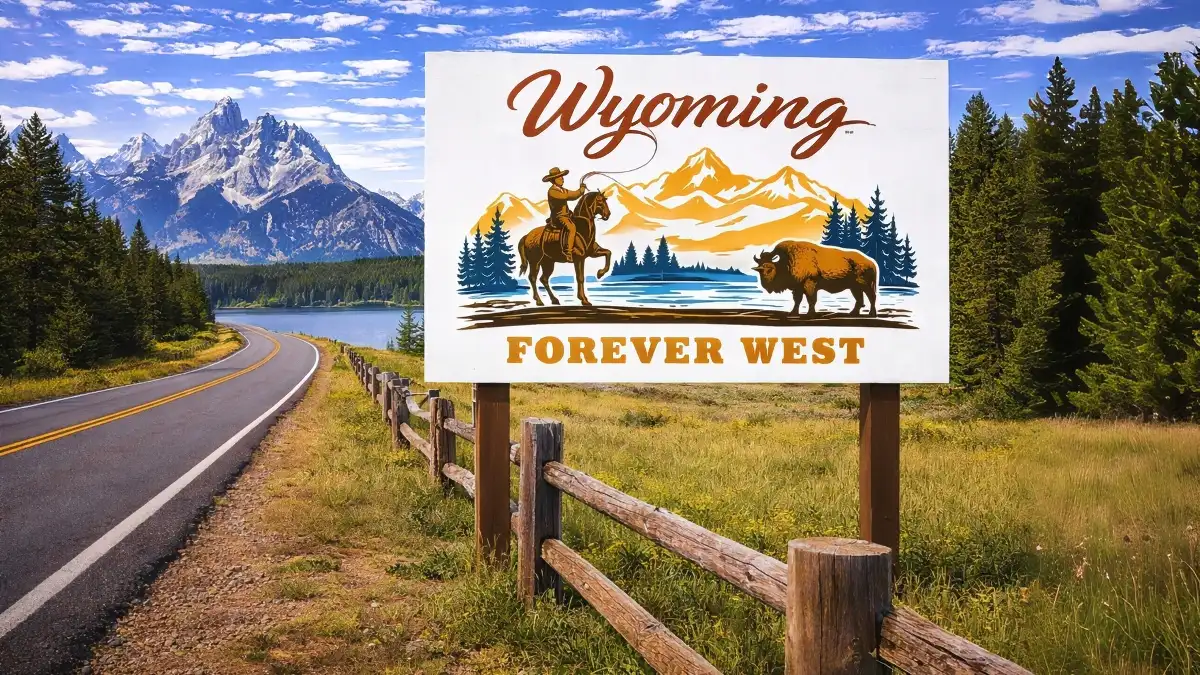
How Wyoming Fence Law Works in Practice
Wyoming’s fence rules are shaped by its ranching history and wide expanses of rural land. Unlike many states, Wyoming does not impose a blanket requirement that neighbors split fence construction or maintenance costs. Instead, state law focuses on livestock control, lawful fence standards, and liability when animals trespass. Understanding this framework is critical before assuming a neighbor owes you fence repairs or reimbursement.
Open Range vs. Closed Range in Wyoming
Most of Wyoming operates under open range principles, meaning livestock are generally allowed to roam unless a specific area has been designated as closed range by local authority. In open range areas, the burden is usually on the landowner who wants protection to build and maintain a lawful fence. This distinction explains why many fence disputes arise when new owners apply assumptions from other states that simply do not apply here.
Major Wyoming Fence Laws
What Qualifies as a Lawful Fence in Wyoming
Wyoming statutes outline what constitutes a lawful fence for livestock control purposes. While exact specifications can vary by context, the law focuses on whether the fence is reasonably sufficient to restrain ordinary livestock. A fence that looks substantial but fails to meet statutory expectations may not provide legal protection in a dispute involving trespass or damage.
Fence Responsibility: Who Pays and Who Maintains
Under the state law, there is no automatic requirement that adjoining landowners share fence costs. Responsibility typically falls on the party who benefits from the fence unless a specific agreement, court order, or local ordinance says otherwise. This is a major point of confusion for landowners who assume that shared boundaries automatically mean shared expenses.
Does a Fence Establish the Property Line?
A common misconception is that a fence automatically marks the legal boundary. In the Cowboy State, deeds and surveys control, not fence placement. While long-standing fences can become evidence in a dispute, they do not override recorded property descriptions on their own. This distinction matters greatly when fences are misplaced by even a few feet.
What to Do If You Believe a Neighbor’s Fence Is Illegal
Before taking action, it’s important to slow down and verify the facts. Fence disputes escalate quickly when assumptions replace documentation. Confirm the property line with a survey, determine whether the fence meets lawful standards, and identify whether open or closed range rules apply. Acting without this information can create liability rather than resolve it.
Checklist Before Taking Action on a Wyoming Fence Dispute
- Confirm Boundary: Review your deed and obtain a survey if the line is unclear.
- Identify Fence Type: Determine whether the fence is for livestock control or private use.
- Check Range Status: Verify whether your area is open or closed range.
- Review Lawful Standards: Ensure the fence meets Wyoming’s statutory expectations.
- Avoid Self-Help: Do not remove or alter a fence without legal authority.
🛠️ Free Resource: The Professional Fence & Boundary Audit 🛠️
Don’t risk legal liability or neighbor disputes by guessing. We’ve developed this comprehensive 4-phase field guide to help you audit boundaries, verify compliance, and document communication like a pro.
📥 Download the Printable PDF Audit
Print this out to use as a worksheet while you walk your property line.
Wyoming Fence Law Case Studies: Real Court Decisions
These Wyoming court decisions show how fence-related disputes are actually resolved in practice. Rather than applying rigid fence formulas, Wyoming courts focus on adverse possession, boundary recognition, and the intent and conduct of neighboring landowners over time. These cases help explain when fences matter legally—and when they do not.
Sellers v. Claudson (2024)
In Sellers v. Claudson, the Wyoming Supreme Court addressed a boundary dispute involving a wedge of land separated by a fence. One party argued that long-term use up to the fence line established ownership through adverse possession. The court emphasized that the presence of a fence alone does not control ownership and that all statutory elements of adverse possession must be proven.
- Legal Principle: A fence does not automatically establish ownership without meeting adverse possession requirements.
- Key Limitation: Long-term use near a fence must still satisfy statutory elements such as exclusivity and hostility.
- Key Takeaway: Wyoming courts prioritize statutory proof over physical fence placement.
White v. Wheeler (2017)
In White v. Wheeler, neighboring landowners disputed whether fencing and grazing livestock on disputed land amounted to adverse possession. The Wyoming Supreme Court held that occasional use and shared access—even with fencing—failed to meet the strict requirements for adverse possession under Wyoming law.
- Legal Standard: Adverse possession requires open, notorious, exclusive, and continuous use.
- Fence Role: Fencing alone does not establish exclusive possession.
- Key Takeaway: Shared or intermittent use defeats adverse possession claims, even when fences exist.
Boot Ranch, LLC v. Wagonhound Land & Livestock Co., LLC (2024)
In Boot Ranch, LLC v. Wagonhound Land & Livestock Co., the court examined whether a long-standing fence supported a quiet title claim. The dispute centered on whether the fence was merely a fence of convenience or reflected an intent to exclude others. The Supreme Court reversed the lower court, finding the evidence did not support permissive use.
- Fence Interpretation: Courts examine whether a fence was intended as a boundary or built for convenience.
- Legal Principle: Intent behind fencing and land use is critical in quiet title disputes.
- Key Takeaway: Fence purpose and landowner conduct carry significant legal weight.
FAQs
Do I have to pay for my neighbor’s fence in Wyoming?
No. Wyoming law does not impose automatic cost-sharing for boundary fences unless there is an agreement or local rule requiring it.
Is Wyoming an open range state?
Yes. Most of Wyoming follows open range principles, though some local areas may be designated closed range.
Can a fence become the legal boundary over time?
A fence alone does not change ownership. Surveys and deeds control, though a long-standing fence may be evidence in certain disputes.
Can I remove a fence that is on my property?
Removing a fence can create liability if the boundary is disputed. Confirm ownership and seek legal guidance first.
Do city fence rules override state law?
Yes. Municipal ordinances often control fence height, materials, and placement within city limits.
Conclusion
Wyoming fence laws are shaped by open range principles, lawful fence standards, and recorded property boundaries, not by assumptions about shared responsibility. Most disputes arise when landowners act on expectations carried over from other states rather than on Wyoming’s statutory framework. Verifying the boundary line, identifying whether open or closed range rules apply, and understanding what qualifies as a lawful fence are often the difference between resolving a disagreement early and escalating it into a legal conflict.
For some landowners, repeated fence maintenance issues or boundary uncertainty become an ongoing burden rather than a one-time problem. In those situations, stepping back from the dispute entirely may be the most practical option. Resources such as selling land in Wyoming provide an alternative path forward when fence-related complications outweigh the value of continued ownership.