Sell Your North Carolina Land for Cash

We Pay All Closing Costs & Fees. No Realtors.

Sell Your North Carolina Land for Cash
We Pay All Closing Costs & Fees. No Realtors.

Get Your Cash Offer in 24 Hours

CONTACT INFORMATION

CONTACT INFO

PROPERTY INFORMATION

PROPERTY INFO

Land Buying Company - 5-Star Google Rating for Bubba Land
Land Valuation Specialist - MSRE Degree for Bubba Peek
American Owned Small Business - Fast Land Buyer
Prestigious CCIM Designation - Certified Land Buyer
Reviews for Bubba Land Buying Company

Skip the Listing. Sell Directly to Bubba Land Company.

Selling land in North Carolina the traditional way is painfully slow. You have to find an agent, pay for a survey, wait for soil/perc tests, and hope the buyer can actually get financing.

We are different. We are the direct buyers.

Bubba Land Company is a local team that buys land “As-Is.” Whether you have a rural plot in the mountains, an inherited lot in the city, or acreage you just don’t visit anymore, we will make you a cash offer today and close on your timeline.

  • No Commissions or Hidden Fees: We pay 100% of the closing costs.
  • We Pay the NC Excise Tax: We cover the “Revenue Stamps” so you don’t have to.
  • We Buy “As-Is”: No need to clear brush, mark boundaries, or pay for a survey.

How Our NC Buying Process Works

Step 1: Submit Your Info

Fill out the form above with your County and Parcel ID. It takes less than 5 minutes. We don’t need a perfectly manicured property—we buy raw land as-is.

Step 2: Get a Cash Offer

We review county data (zoning, topography, access) and send you a no-obligation cash offer within 24 hours. No waiting for banks.

Step 3: Close & Get Paid

We send the paperwork to a trusted North Carolina Closing Attorney. You sign the deed, and the cash is wired directly to your bank account.

Understanding North Carolina Land Value

Land valuation in North Carolina is driven by utility, not just acreage. A 5-acre tract in the Piedmont that passes a perc test is worth significantly more than 50 acres of landlocked timber in the Coastal Plain. Led by a CCIM designee, Bubba Land Company uses real sold data—not automated algorithms—to calculate a fair, direct offer.

2024 Average Values by Region

Based on USDA National Agricultural Statistics Service (2024) data, land values vary significantly by location and utility:

The Piedmont (Central NC)

Driver: Development Potential. This is the highest-value region due to the “sprawl” from Charlotte and Raleigh. While the USDA reports a statewide Farm Real Estate average of $5,350/acre, transitional land in the Piedmont often trades higher ($6,000 – $10,000+/acre) if it has road frontage and soils suitable for subdividing.

Coastal Plain (East)

Driver: Agriculture & Timber. Value here is tied to soil productivity. Irrigated cropland in Eastern NC averages $5,150/acre, while non-irrigated pastureland averages $4,700/acre. However, “Wetlands” are the major value killer—swamp land often sells for $1,000 – $1,500/acre as recreational tracts.

Mountains (West)

Driver: Topography & Views. The most volatile market. Steep “cliffside” acreage with no build site has low utility (often trading near $2,500 – $3,500/acre), while gently rolling pasture or ridge-tops with long-range views trade at a significant premium over the state average.

Real Factors That Drive Your Offer

Beyond the regional averages, these specific onsite factors determine the final check amount:

  • The “Perc Test” Status: In North Carolina, soil is everything. If land does not “perc” (drain well enough for a septic tank), it cannot legally have a house built on it. Land with a failed perc test is often valued as “Recreational Only” (typically 50-60% less than buildable land).
  • Deeded vs. Physical Access: An old dirt road doesn’t always mean legal access. If your land is “landlocked” (surrounded by neighbors with no recorded easement), it requires expensive legal work to cure, which reduces the “As-Is” cash offer.
  • Timber Value (Pine vs. Hardwood): We evaluate the standing timber. Mature Loblolly Pine plantations in the Coastal Plain can add significant value ($1,000+ per acre in stumpage), whereas cut-over or scrub timber tracts are valued on land-basis only.
  • Floodplain & Wetlands: Especially in Eastern NC, FEMA flood zones increase insurance costs and limit building. We buy these “wet” properties for hunting/conservation, but they trade significantly lower than high-ground acreage.

We Buy Land in All 100 North Carolina Counties

Bubba Land Company actively acquires land across the entire state. From the Blue Ridge Mountains to the Outer Banks, we are interested in every corner of North Carolina. While we have highlighted our major hubs above, we are ready to make a competitive cash offer on property in any of the 100 counties listed below.

Mountains & West

  • Alexander County
  • Alleghany County
  • Ashe County
  • Avery County
  • Buncombe County
  • Burke County
  • Caldwell County
  • Cherokee County
  • Clay County
  • Graham County
  • Haywood County
  • Henderson County
  • Jackson County
  • Macon County
  • Madison County
  • McDowell County
  • Mitchell County
  • Polk County
  • Rutherford County
  • Surry County
  • Swain County
  • Transylvania County
  • Watauga County
  • Wilkes County
  • Yancey County

Western Piedmont

  • Alamance County
  • Cabarrus County
  • Caswell County
  • Catawba County
  • Chatham County
  • Cleveland County
  • Davidson County
  • Davie County
  • Durham County
  • Forsyth County
  • Gaston County
  • Granville County
  • Guilford County
  • Iredell County
  • Lincoln County
  • Mecklenburg County
  • Orange County
  • Person County
  • Randolph County
  • Rockingham County
  • Rowan County
  • Stanly County
  • Stokes County
  • Union County
  • Yadkin County

Central & Sandhills

  • Anson County
  • Bladen County
  • Cumberland County
  • Duplin County
  • Edgecombe County
  • Franklin County
  • Greene County
  • Halifax County
  • Harnett County
  • Hoke County
  • Johnston County
  • Lee County
  • Montgomery County
  • Moore County
  • Nash County
  • Northampton County
  • Richmond County
  • Robeson County
  • Sampson County
  • Scotland County
  • Vance County
  • Wake County
  • Warren County
  • Wayne County
  • Wilson County

Coast & Outer Bank

  • Beaufort County
  • Bertie County
  • Brunswick County
  • Camden County
  • Carteret County
  • Chowan County
  • Columbus County
  • Craven County
  • Currituck County
  • Dare County
  • Gates County
  • Hertford County
  • Hyde County
  • Jones County
  • Lenoir County
  • Martin County
  • New Hanover County
  • Onslow County
  • Pamlico County
  • Pasquotank County
  • Pender County
  • Perquimans County
  • Pitt County
  • Tyrrell County
  • Washington County

Our North Carolina Buying Markets

While we define our service regions by these major cities, we do not buy residential city lots. In North Carolina, Bubba Land Company focuses exclusively on rural acreage (3+ acres), timberland, and farmland located outside the city limits. If you have a larger tract within driving distance of these hubs—from the Blue Ridge Mountains to the Piedmont—we are ready to make a cash offer.

Metrolina Region

  • Charlotte, NC
  • Concord, NC
  • Gastonia, NC
  • Monroe, NC
  • Matthews, NC

Eastern Triangle

  • Raleigh, NC
  • Garner, NC
  • Knightdale, NC
  • Wake Forest, NC
  • Clayton, NC

Western Triangle

  • Durham, NC
  • Chapel Hill, NC
  • Hillsborough, NC
  • Roxboro, NC
  • Oxford, NC

Eastern Triad

  • Greensboro, NC
  • Burlington, NC
  • Reidsville, NC
  • Browns Summit, NC
  • Mebane, NC

Western Triad

  • Winston-Salem, NC
  • Kernersville, NC
  • Clemmons, NC
  • Lexington, NC
  • Mocksville, NC

NC Mountain Region

  • Asheville, NC
  • Hendersonville, NC
  • Black Mountain, NC
  • Waynesville, NC
  • Brevard, NC

Bubba Land Company buys vacant land, rural acreage, farms, and recreational property across the Southeast. We make fair cash offers based on real market data and keep the process straightforward for landowners who want to sell without the usual delays. We also help sellers in neighboring states, including South Carolina land buyers, sell land in Virginia, and Tennessee land buyers.

Net Cash vs. Gross Listing: What You Actually Keep

In North Carolina, a higher listing price doesn’t always mean more money in your pocket. When you sell with an agent, your final check is stripped down by 6-10% commissions, attorney closing fees, survey costs, and the mandatory NC Excise Tax ($1 per $500). We operate on a strict “Net Cash” model. We pay 100% of the closing costs and transfer taxes, meaning the offer we make is the exact amount wired to your account. See the real breakdown below:

Selling Factor Bubba Land Company NC Realtor For Sale By Owner
Time to Sell ✅ Fast (14–30 days) — No “Due Diligence” Delays Moderate (3–6 months) Variable (6–12+ months)
NC Excise Tax ✅ We Pay It — ($1.00 per $500 Value) Seller Pays (Deducted at Closing) You Pay 100% of Tax
Commissions & Fees ✅ $0 Fees — We Pay All Closing Costs High (6-10% Comm. + Admin Fees) Low (But You Pay Marketing Costs)
Final Sale Price ✅ Fair As-Is Cash Offer Market Value (Subject to Appraisal) Potentially Higher, No Guarantee
Closing Process ✅ Managed — We Hire the NC Attorney Realtor Coordinates w/ Attorney You Must Hire an NC Attorney
Survey / Perc Test ✅ Not Required — We Buy “As-Is” Buyer Often Requires New Survey Buyer Demands Soil Tests
Certainty of Closing ✅ High — No Bank Financing Risk Moderate — Deals Fall Through Low — Frequent Buyer Back-out

How to Sell Land in North Carolina Without a Realtor

1. Gather Your Essential Documents

Before you list your property, you need to prove you have the legal right to sell. In North Carolina, serious buyers will expect to see:

  • The Deed: Proves you are the legal owner.
  • Survey (Plat Map): If your survey is older than 10 years, buyers may request a new one (Cost: $500 – $2,000).
  • Tax Documents: Shows current county tax assessment and any back taxes owed.
  • HOA/POA Bylaws: If your land is in a development, disclose the fees upfront.

2. Where to List Land for Sale by Owner

To find a buyer, you need exposure. The most effective platforms for North Carolina land include:

  • Lands of America / LandWatch: The biggest marketplaces, but they charge listing fees.
  • Facebook Marketplace: Good for cheaper, rural lots, but expect many “tire kickers.”
  • Craigslist: Still effective for local investors.
  • Zillow (FSBO): You can list for free, but agents often filter these out.

3. Navigate the NC Closing Process

North Carolina is an “Attorney Close” state. You cannot just sign a deed at the kitchen table.

  • The Contract: You need a standard “Offer to Purchase and Contract – Vacant Lot/Land” form.
  • The Excise Tax: In NC, the seller typically pays the “Revenue Stamps” tax ($1.00 for every $500 of value).
  • The Attorney: You will need to hire a real estate attorney to conduct the title search and record the deed.

North Carolina Land Guides For Sellers

North Carolina land can lose momentum fast when one hidden issue gets discovered too late. A missing document, access problem, subdivision snag, or inherited title question can quickly turn a strong deal into a slow one. These guides are ordered around the issues most likely to affect your timeline, your leverage, and how smoothly your North Carolina land sale actually closes.

Ready to Sell Your North Carolina Land?

Don’t let your land sit on the market for months while you continue paying property taxes. Real estate agents focus on houses, not land. That is why land listings often sit for 6-12 months without a single offer.

We are different. At Bubba Land Company, we buy land directly. No commissions, no bank approvals, and no waiting. Whether you have 50 acres of timberland or a small residential lot, we want to make you an offer. Click the button below to get your no-obligation cash offer in the next 24 hours.

FAQs: Sell My Land North Carolina

Charlotte, North Carolina city skyline view with park, trees, reflective water feature, and surrounding urban area
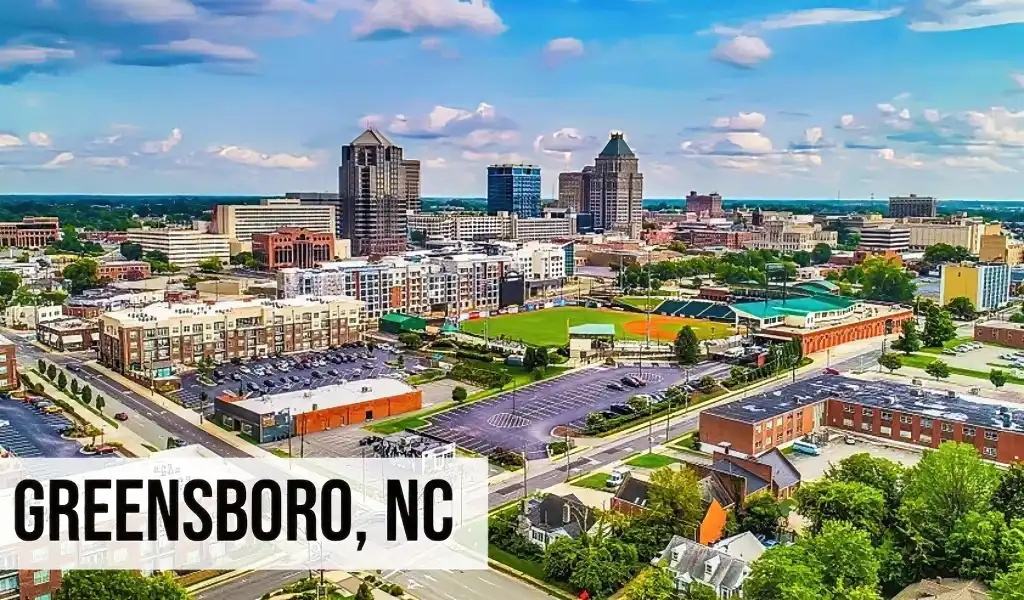
Greensboro, North Carolina aerial view of downtown with office buildings, streets, parking areas, and surrounding neighborhoods
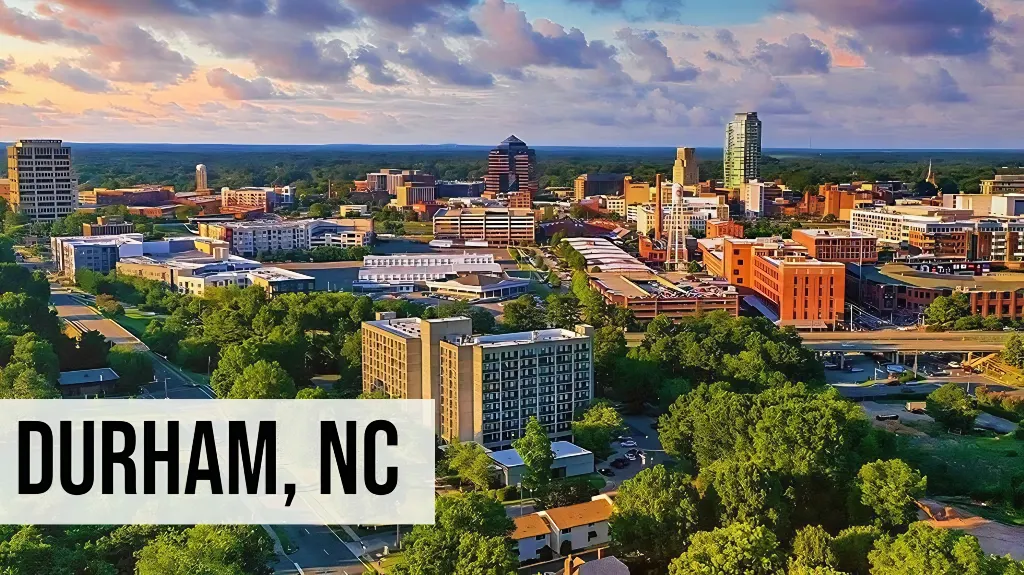
Durham, North Carolina aerial view of downtown with mixed-use buildings, streets, green space, and surrounding city
Winston-Salem, North Carolina evening city skyline view with illuminated buildings, streets, and surrounding urban area
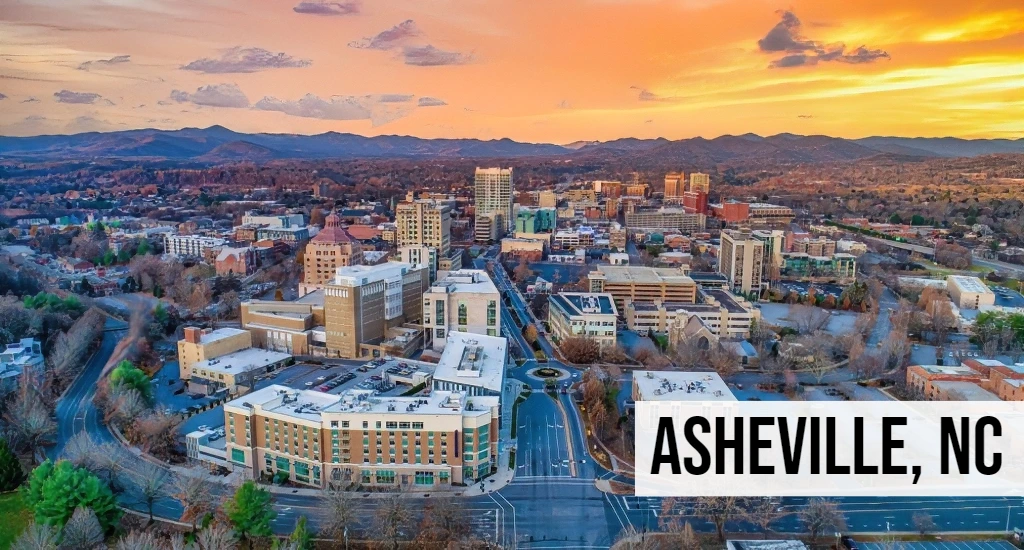
Asheville, North Carolina aerial view of downtown with city buildings, streets, and surrounding mountain landscape.
Raleigh, North Carolina aerial view of downtown skyline with government buildings, streets, and surrounding city area

Preparing your land properly helps buyers visualize its potential and can significantly increase its market value.

  • Maintain the property: Clear debris, mow overgrown vegetation, and remove unsightly materials to boost immediate curb appeal.
  • Mark property boundaries: Clearly marked corners and property lines help buyers understand the exact size and layout of the acreage.
  • Research zoning regulations: Highlight the specific development potential for residential, commercial, or agricultural use.
  • Improve accessibility: Ensure access roads are clear. Properties with direct public road frontage hold higher value due to easier development potential.
  • Provide utility information: Document the availability and proximity of water, electricity, and sewage connections.
  • Secure necessary approvals: Having recent surveys, environmental assessments, or active building permits provides immediate assurance to prospective buyers.

Accurate land valuation requires specialized market analysis. Relying on an expert ensures you understand your property’s true worth.

  • Consult a land valuation expert: Working with a Certified Commercial Investment Member (CCIM) or a Master of Science in Real Estate (MSRE) provides the most comprehensive and accurate valuation.
  • Compare recent sales: Look at recently sold vacant land in your immediate area that shares similar characteristics in size, zoning, and utility access.
  • Evaluate the highest and best use: Determine the most profitable potential for your land, whether it is ideal for hunting, timber harvesting, or residential development.
  • Review your property tax assessment: Your local assessor records an assessed value, which typically reflects roughly 50% of the market value under North Carolina law. Use this as a baseline, keeping in mind that local market conditions fluctuate.

Selling rural land requires a different approach than selling a residential home. Keep these strategies in mind for a smooth transaction.

  • Maintain the land: Well-kept property with accessible entryways appeals strongly to serious buyers.
  • Price the property accurately: Setting a realistic price based on thorough market analysis attracts motivated buyers and reduces your time on the market.
  • Address title issues early: Resolve any liens or boundary disputes proactively to keep the closing process moving forward.
  • Choose a trusted buyer: Working with a dedicated land acquisition specialist like Bubba Land Company ensures a simplified, hassle-free transaction without the usual red tape.

Traditional land sales come with a variety of hidden fees and closing costs. Selling directly to a cash buyer can eliminate many of these expenses.

  • Real estate commissions: Traditional agent fees for vacant land typically range between 5% and 10% of the final sale price.
  • Transfer taxes: North Carolina charges a state tax rate of $3.75 per $500 of the property value, plus a county tax rate of $0.55 per $500.
  • Title insurance: This policy protects against competing claims on the property. In North Carolina, the buyer usually covers this cost at closing.
  • Attorney and recording fees: Closing a traditional sale requires legal processing, loan origination fees, and county recording fees.

Understanding the closing timeline makes for a much smoother and more predictable transaction.

  • Open escrow with a purchase agreement: Once terms are agreed upon, an escrow account is opened with a reputable title company or closing attorney to secure all funds and documents.
  • Conduct a title search: The closing attorney verifies clear ownership by checking for unpaid taxes, liens, or competing claims.
  • Complete due diligence: Buyers may execute land surveys or environmental checks to confirm the boundaries and condition of the property.
  • Finalize closing costs: Transfer taxes, attorney fees, and any prorated property taxes are properly documented and settled.
  • Record the deed: The final paperwork is signed, the deed is recorded with the local county, and the seller receives the sale proceeds. Bubba Land Company handles this entire process to provide a seamless “as-is” closing.

The timeline for selling land varies widely based on your chosen method and the specific characteristics of your property.

  • Market conditions: High-growth areas often see faster sales, while remote hunting land or timberland may require finding a highly specialized buyer.
  • Listing strategy: Traditional listings can sit on the market for several months to over a year while waiting for the right buyer to secure financing.
  • Title and legal complexities: Unresolved boundary disputes or missing inherited property documents can significantly delay a traditional closing.
  • Direct cash sales: Bubba Land Company provides nationwide cash offers quickly and specializes in simplified divestment, allowing you to close on your own timeline.

Choosing a direct land acquisition company offers numerous advantages for landowners seeking a straightforward exit strategy.

  • Experience simplified divestment: You sell your land entirely “as-is” without needing to clear brush, conduct surveys, or make any improvements.
  • Eliminate real estate commissions: Direct sales remove agent fees and marketing costs, allowing you to keep exactly what is offered.
  • Close faster: Cash acquisitions bypass traditional bank financing, appraisal delays, and lengthy due diligence periods.
  • Receive competitive offers: Bubba Land Company evaluates your land’s true potential, including timber volume and recreational value, to deliver a fair and reliable cash offer.

Selling your land independently requires careful preparation, marketing, and legal oversight.

  • Gather essential documents: Collect your current deed, property survey, tax records, and any applicable zoning permits.
  • Prepare the property: Clear accessible pathways and mark your boundaries to make property viewings easy for prospective buyers.
  • Research the market: Consult local sales data for similar vacant acreage to determine a competitive asking price.
  • List the property: Utilize online platforms like Zillow, Facebook Marketplace, and specialized land listing websites to reach buyers.
  • Manage inquiries: Respond promptly to interested buyers and evaluate incoming offers based on price, terms, and contingencies.
  • Hire a real estate attorney: Legal representation is highly recommended in North Carolina to draft a secure purchase agreement and guide you safely through the closing process.

North Carolina features a robust real estate market with active buyers seeking properties across the entire state.

  • Urban and suburban growth: High development demand drives consistent sales in Wake, Mecklenburg, Durham, and Guilford counties.
  • Mountain and recreational land: Hunting acreage, timberland, and rural retreats are highly sought after in Watauga, Ashe, Cherokee, and Jackson counties.
  • Coastal proximity: Properties located near waterways and beaches hold high value in Brunswick, New Hanover, and Carteret counties.
  • Nationwide acquisition: Bubba Land Company buys rural acreage and inherited properties nationwide, maintaining a strong and active focus throughout all North Carolina counties.

Investors and developers consistently target areas experiencing rapid economic and population growth.

  • Major metropolitan hubs: Charlotte, Raleigh, Greensboro, and Durham see continuous high demand for commercial and residential plots.
  • Fast-growing secondary markets: Asheville, Wilmington, Winston-Salem, and Fayetteville attract strong interest for both development and recreational properties.
  • Expanding suburban areas: Cities including Cary, Concord, Apex, and Mooresville offer prime opportunities for builders and land investors.